

By B2B Asia News on Jun, 11 2026
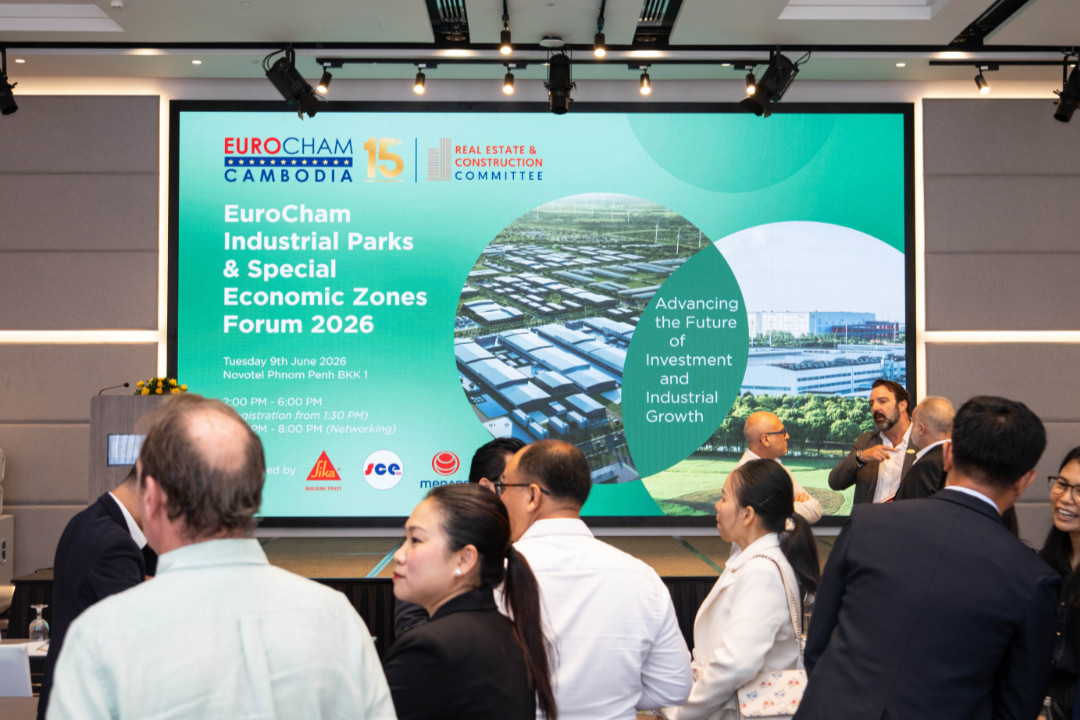
EuroCham Cambodia's Real Estate & Construction Committee hosted the Industrial Parks & Special Economic Zones Forum 2026 at Novotel Phnom Penh BKK1 on June 9, bringing together government officials, investors, developers, logistics operators, and construction specialists to examine Cambodia's industrial real estate landscape and the opportunities and risks shaping its next phase of growth.
Sponsored by Sika, Standard Construction & Engineering (SCE), and Menard, the forum featured presentations and panel discussions covering Cambodia's regulatory environment, market pricing, and practical case studies in industrial park design and delivery.
Michel Cassagnes, Chairperson of EuroCham Cambodia's Real Estate & Construction Committee and Managing Director of Archetype Cambodia, Laos and Vietnam, opened proceedings and set the tone for the afternoon's discussions.
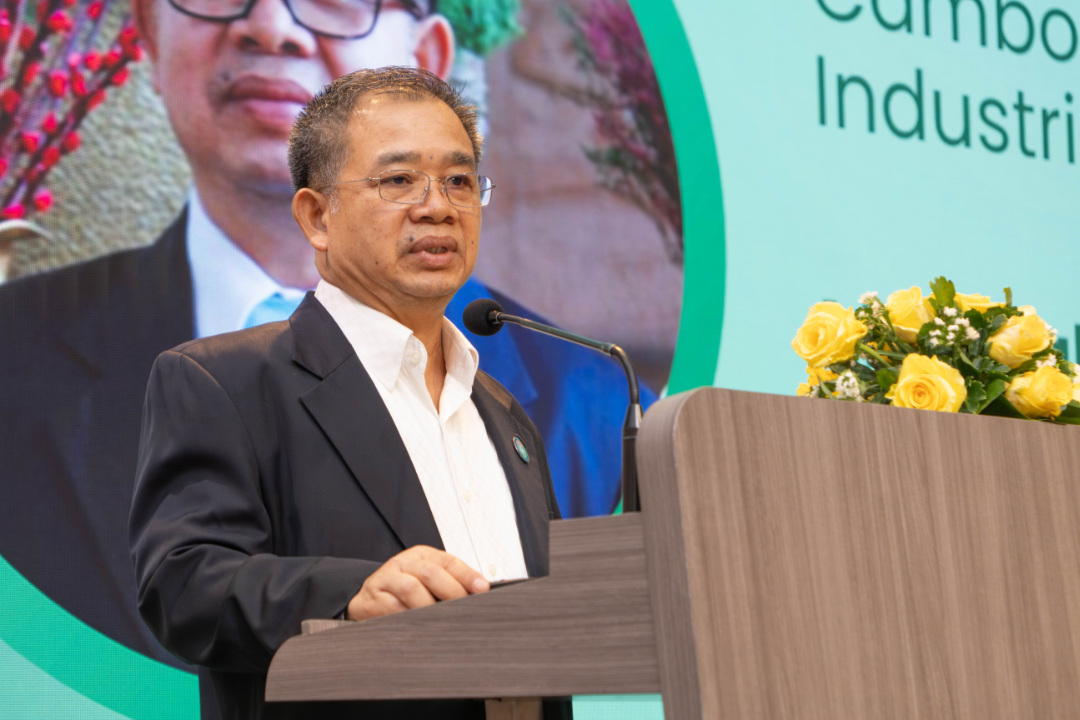
Virak Ouproum, Deputy Director General of the Directorate General of Industry at MISTI, provided a data-driven overview of Cambodia's industrial landscape. As of April 2026, the country hosts 3,266 operating factories employing 1,310,981 workers, of whom 70 per cent are women. Within the SEZ network, 33 of 56 registered zones contain 642 factories and employ more than 200,000 workers, while 20 industrial parks house a further 150 factories and more than 90,000 workers.
Against that backdrop, Virak flagged a looming structural challenge: Cambodia's scheduled graduation from Least Developed Country (LDC) status in 2029 will trigger the loss of preferential trade arrangements including the EU's Everything But Arms (EBA) scheme and US MFN/GSP access. He argued that Cambodia must accelerate a transition toward higher-value industries (electronics, automotive, precision engineering, and agro-processing) while investing in infrastructure, energy, and workforce development to remain competitive.
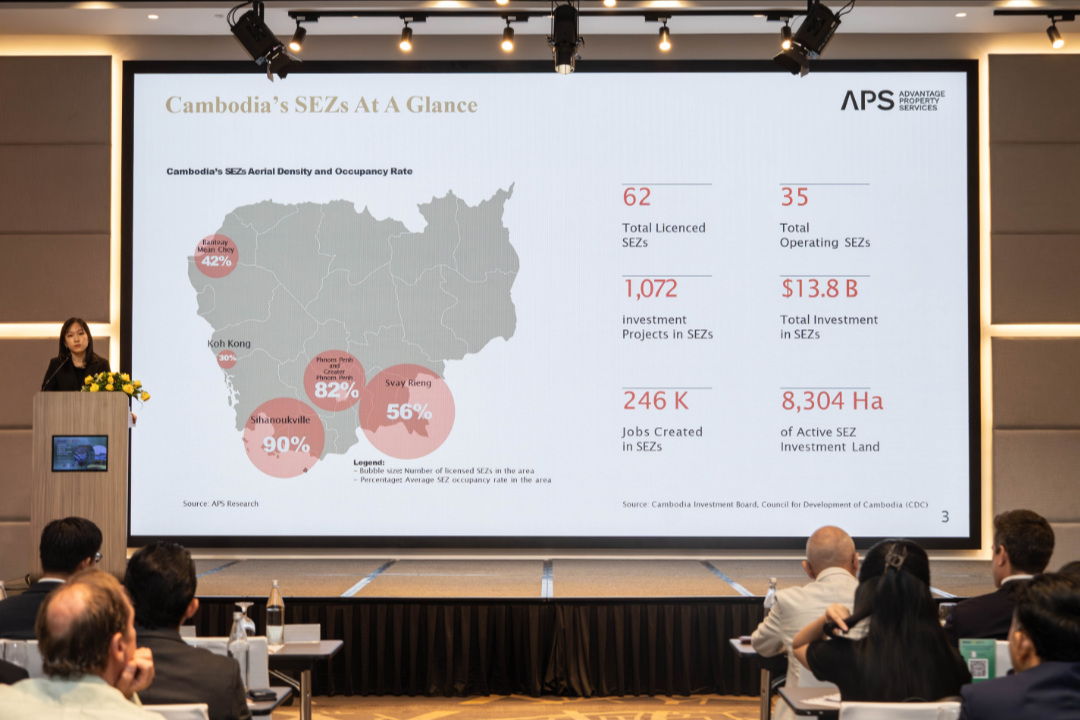
Kim Kinkesa, Managing Director of Advantage Property Services (APS Cambodia, formerly CBRE Cambodia), followed with market intelligence that underscored Cambodia's cost advantage over regional competitors. Ready-built factory rental rates average USD 3.05 per square metre per month — significantly below the USD 4.70 recorded in both North and South Vietnam — while 50-year land lease prices average USD 69.25 per square metre. Cambodia's licensed SEZs have attracted USD 13.8 billion in total investment across 8,304 hectares of active land, with occupancy rates ranging from 90 per cent in Sihanoukville to 42 per cent in Banteay Meanchey.
“From my perspective, Cambodia’s industrial market remains competitive, supported by affordable land and relatively low operating costs," said Kinkesa. “However, the next phase of industrial development will require a much more coordinated ecosystem from national zoning and reliable logistics networks to skilled labour, energy efficiency, sustainability, transparency, and investor confidence. In a world where uncertainty is becoming the norm, Cambodia must build not only a competitive industrial ecosystem, but a resilient one."
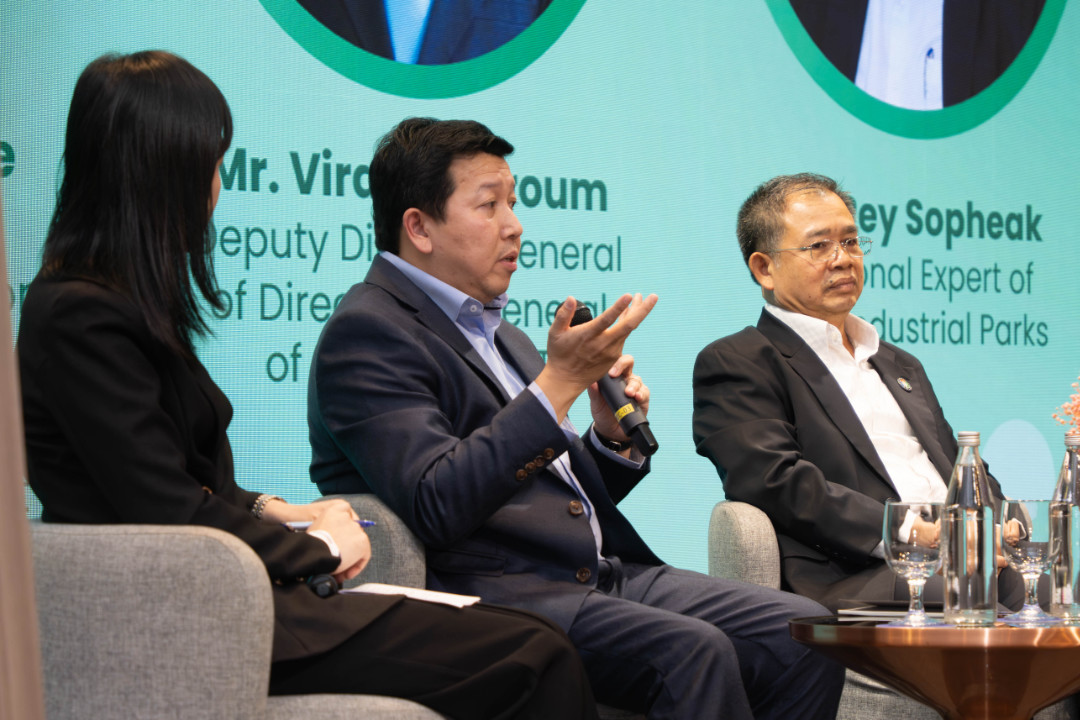
A first panel discussion, moderated by Kinkesa and featuring Hean Sopauline of the Cambodian Investment Board, Virak Ouproum, and Dr. Rey Sopheak, National Expert on Eco-Industrial Parks, examined strategic priorities for Cambodia's SEZ and industrial park sectors. Panellists explored the complementary roles of SEZs, which offer facilitated customs, shared infrastructure, and investment incentives suited to export manufacturers, and non-SEZ industrial parks, which provide greater flexibility and potentially lower costs for domestically focused businesses. The growing role of eco-industrial parks in attracting higher-value tenants and meeting investor ESG expectations was also discussed.
François Magnier, International Director and Design Director of IDEC Group Asia, then presented case studies from IDEC's global portfolio of over 1,500 industrial projects across 22 countries, illustrating how international design and construction standards, including LEED certification and purpose-built logistics infrastructure, shape tenant attraction and long-term park performance. His presentation offered a practical reference for Cambodian developers looking to position new projects for quality occupiers.
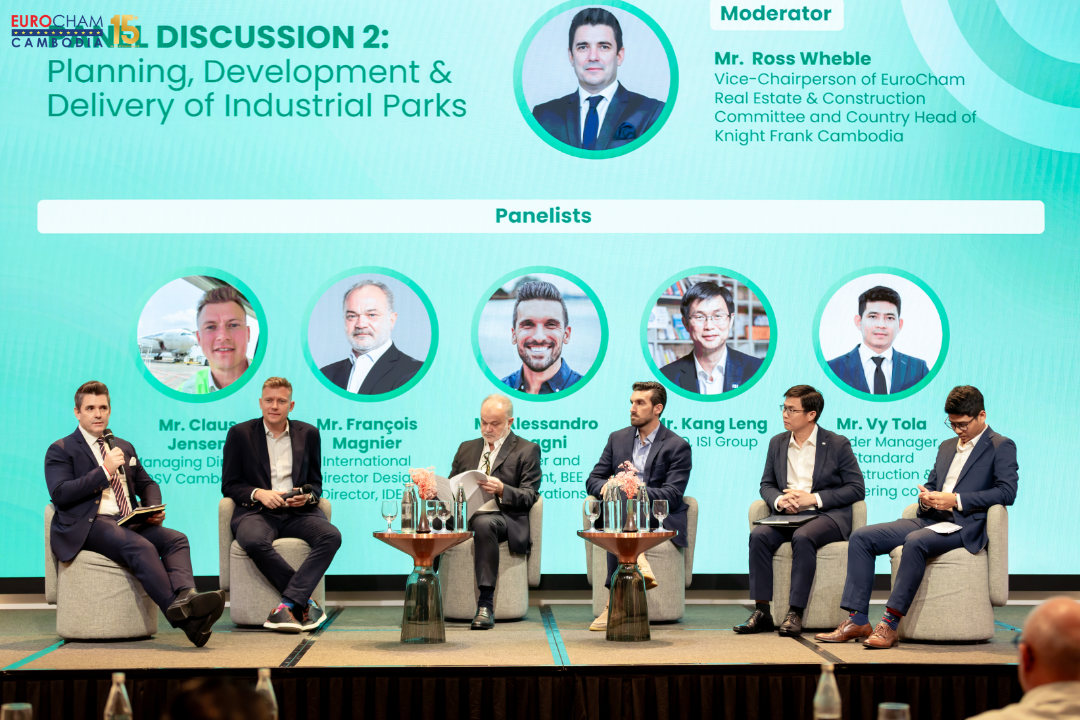
The afternoon's second panel, moderated by Ross Wheble, Vice-Chairperson of EuroCham's Real Estate & Construction Committee and Country Head of Knight Frank Cambodia, brought together Claus Jensen of DSV Cambodia, Alessandro Bisagni of BEE Incorporations, Kang Leng of ISI Group, and Vy Tola of Standard Construction & Engineering to examine the full lifecycle of industrial park delivery, from financing and planning through construction and occupancy. Discussion highlighted logistics integration, energy reliability, and construction quality as key differentiators in a market facing intensifying regional competition.
“What came through clearly this afternoon is that the fundamentals are there: land availability at competitive rates, access to labour, conducive trade frameworks, and the continued growth in exports and expansion of the manufacturing ecosystem — despite disruptive external factors,” said Wheble. "But the gap between Cambodia's potential and its realisation as a serious industrial destination comes down to forward planning and execution.
““Developers, logistics providers, construction specialists and government all have a role to play, but their ambitions — or priorities — don't always align. Forums like this one matter because they put those conversations in the same room. The question now is whether the sector can move from discussing the opportunity to delivering the product quality and infrastructure reliability that international occupiers actually require.”
Closing remarks were delivered by Narath Chheav, Board Member of EuroCham Cambodia, who called on government, developers, and the private sector to align around building a more competitive industrial destination. The forum concluded with a networking cocktail reception.
This press release was supplied.

Comments