

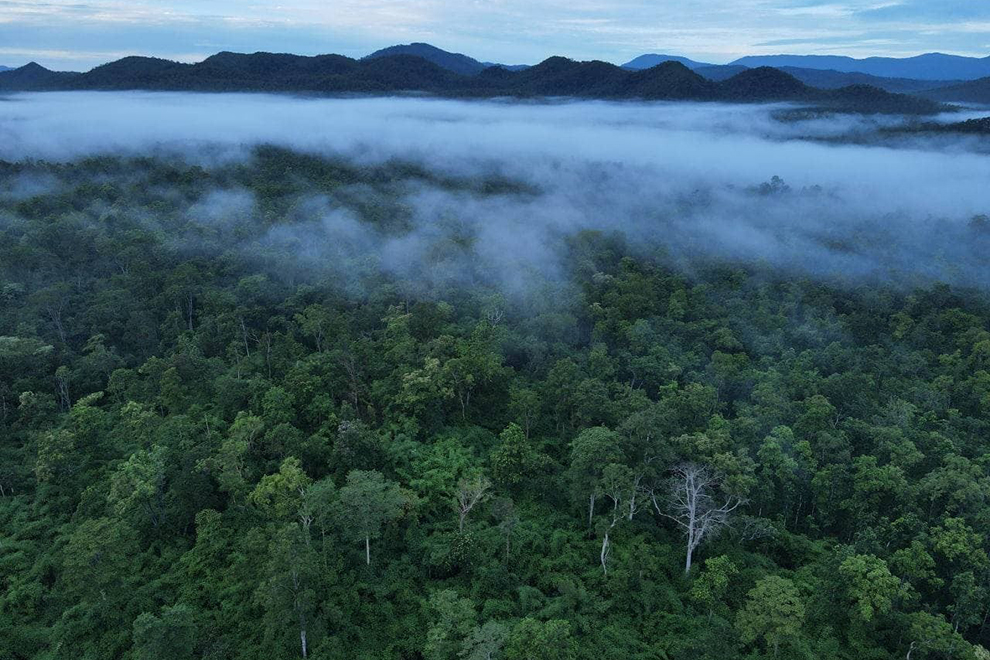
On November 27, Cambodia’s Ministry of Environment and its partner organisation, Wildlife Alliance (WA), refuted allegations of deforestation in the country’s REDD+ projects, as claimed in a France 24 video titled “Real Carbon, False Credits? Investigating Mass Deforestation in Cambodia.”
The ministry criticised the video for presenting outdated images and footage, which it claimed misrepresented the current state of Cambodia’s REDD+ initiatives and caused unnecessary public confusion about the nation’s carbon credit efforts.
“The ministry rejects these exaggerated claims. Our REDD+ projects are implemented under robust national and international frameworks for assessment and auditing, ensuring effective protection and management of protected forest areas rich in biodiversity,” stated a joint press release from the ministry and WA.
Cambodia’s REDD+ initiatives, such as the Southern Cardamom and Keo Seima projects, strictly adhere to globally recognised standards, including the Verified Carbon Standard (VCS), Climate, Community & Biodiversity (CCB) Standards, and Sustainable Development Verified Impact Standard (SD VISta). These standards guarantee the projects’ transparency, credibility, and sustainability.
Wildlife Alliance reaffirmed its commitment to forest conservation, environmental sustainability, and indigenous rights. “The recent France 24 video presents a distorted and misleading narrative about the impact of REDD+ projects on deforestation and indigenous communities’ land access,” WA said. They emphasised that rigorous audits by international third-party experts ensure these initiatives deliver measurable benefits for both the environment and local communities.
The ministry and WA highlighted that Cambodia’s REDD+ projects have mobilised significant resources to preserve forests and support forest-dependent communities. Millions of dollars have been channelled to local populations, empowering them to pursue development goals while contributing to forest conservation.
The statement also noted that these projects have garnered widespread support from local communities, demonstrating their fairness and effectiveness. The government recognised the essential role of indigenous communities in protecting forests and biodiversity, emphasising their adherence to the UN Declaration on the Rights of Indigenous Peoples (UNDRIP) and the principle of free, prior, and informed consent (FPIC).
“France 24’s portrayal disregards the years of dialogue and mutual respect underpinning our collaboration with indigenous populations,” the ministry said, reaffirming its openness to transparent dialogue and constructive feedback but rejecting unfounded accusations that undermine the REDD+ programmes and tarnish the nation’s reputation.
The Southern Cardamom REDD+ project, spanning 465,839 hectares, reduces an estimated 3.8 million tonnes of CO2 annually. It protects over 450,000 hectares of endangered forests and preserves 62 globally threatened species.
The video also included interviews with two environmental activists arrested in Stung Treng province last week and a Chong indigenous family residing in the Southern Cardamom area.

 718.897 SRY