

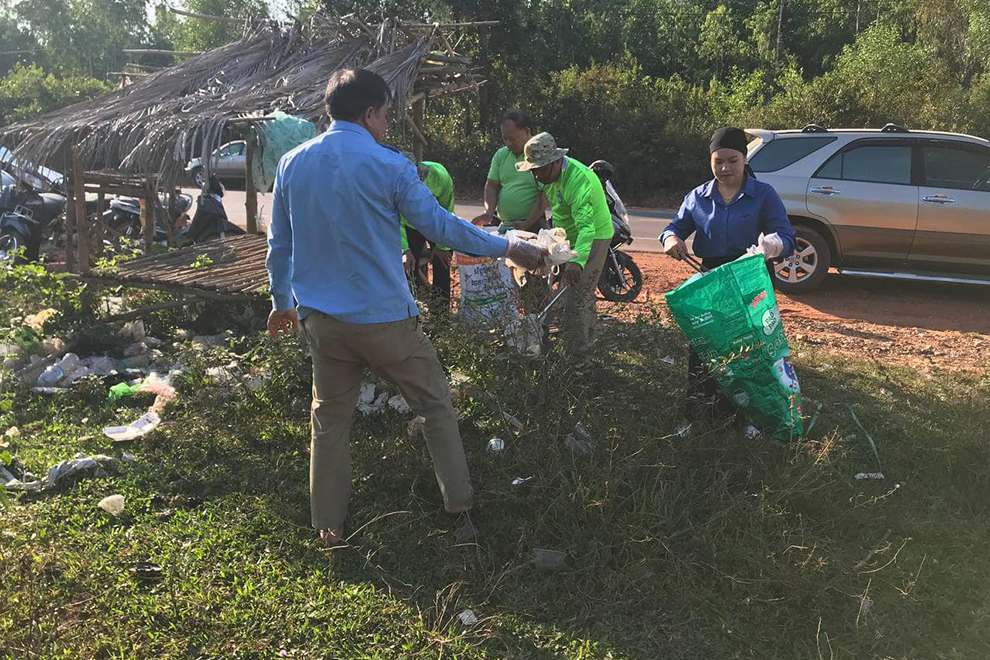
On January 1, Minister of Environment Eang Sophalleth launched the "National Roads Without Plastic Waste" campaign, aiming to rid Cambodia’s national roads of plastic waste by the end of 2025.
The initiative follows successful trial cleanups along key highways, including national roads 3, 4, 41, and 51, which involved leaders, local authorities, civil servants, teachers, students, and citizens. Its primary goal is to ensure roads remain clean, free from scattered plastic waste, and visually appealing.
Minister Sophalleth highlighted that the campaign would enhance the beauty and hygiene of urban areas along national highways, making them more attractive and liveable while boosting tourism and investment opportunities in Cambodia. To achieve this, the Ministry of Environment has formulated an action plan to support the campaign's implementation.
The minister urged all stakeholders, including public and private sectors, municipal and provincial administrations, local authorities, teachers, and students, to actively organise local cleanup activities and strengthen plastic waste management systems. He also encouraged participation in complementary initiatives like “Today I Don’t Use Plastic” and “Clean Cambodia, Khmer Can Do It.” These campaigns have garnered over 9.7 million and 3.6 million participants, respectively, promoting a culture of environmental responsibility.
Cambodia’s 2024 efforts to reduce plastic use achieved significant success, cutting plastic imports and litter along roads in 11 provinces by over 80% compared to 2023. The "National Roads Without Plastic Waste" campaign aligns with the "Clean Our Homes" initiative, aiming to provide a welcoming environment for tourists and investors.
To bolster these efforts, Japan recently donated 10 garbage trucks to Cambodia’s cleanliness campaigns, in addition to 20 trucks provided earlier. The Ministry of Environment has distributed 63 incinerators, 88 trucks, 161 tricycles, and thousands of trash containers to local administrations, schools, health centres, and pagodas, ensuring effective waste management.
Cambodia generates nearly four million tonnes of waste annually, or over 10,000 tonnes daily. Phnom Penh alone contributes about 5,000 tonnes per day, underscoring the urgency of robust waste management initiatives.

 2476.698 SRY