
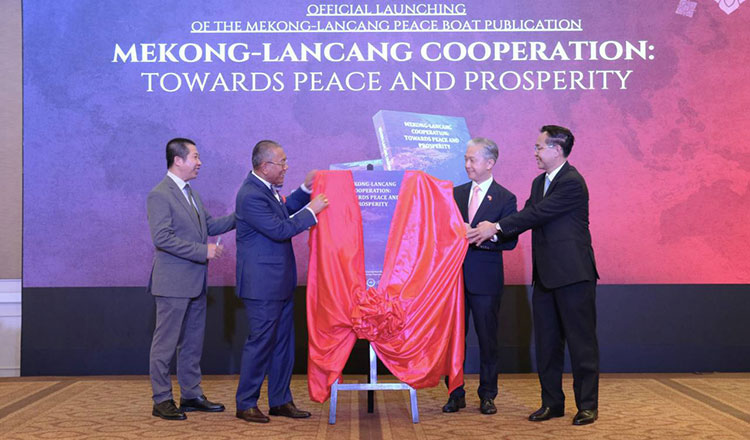
The Lancang-Mekong sub-region has emerged as a significant growth center in Asia, drawing increasing strategic attention due to its geopolitical and geo-economic importance. This was emphasized by Meas Kim Heng, Secretary of State at Cambodia’s Ministry of Foreign Affairs and International Cooperation (MFAIC), during the launch of a book titled Lancang-Mekong Cooperation (LMC): Towards Peace and Prosperity in Phnom Penh. The event underscored the importance of cooperation among the six LMC countries: China, Myanmar, Thailand, Laos, Cambodia, and Vietnam.
Meas Kim Heng outlined six key priority areas for the future of LMC, which include the Lancang-Mekong Economic Development Belt, agriculture, micro, small, and medium enterprises (MSMEs), water management, transboundary crime, and the development of the digital and green economy. He stressed that closer collaboration among these nations is crucial for the region's deeper integration and resilient economic growth. Through this enhanced cooperation, the Lancang-Mekong sub-region has been able to address common challenges while promoting peace, stability, security, and sustainable development.
A key part of the LMC's success has been the leadership role played by China, especially through its continued support of the LMC Special Fund. Kim Heng expressed gratitude to China for its sustained commitment to the region's development. China’s involvement, particularly through initiatives like the Belt and Road Initiative (BRI), the Global Development Initiative, Global Security Initiative, and Global Civilization Initiative, has opened up greater opportunities for regional and global development.
Kim Heng further highlighted the importance of regular high-level exchanges and policy dialogues among LMC countries. These discussions have been instrumental in setting important policy directions, building trust, and fostering mutual understanding. By working together, LMC countries have been able to share benefits and address regional issues more effectively.
In conclusion, the Lancang-Mekong Cooperation framework plays a vital role in advancing the region’s integration and sustainable development. As it continues to evolve, it is expected to drive further economic growth and stability, not just within the region but also on the global stage. With China’s ongoing support and collaborative efforts from all member countries, the Lancang-Mekong sub-region is poised to become an even more dynamic and resilient economic powerhouse in Asia.

 820.977 SRY