

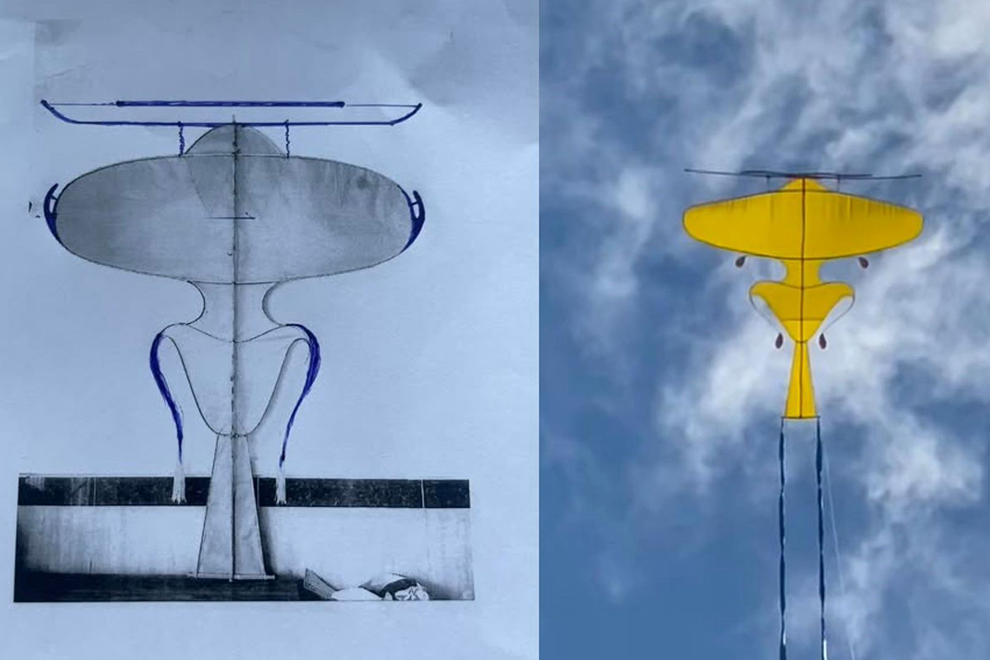
A large kite ascends into the sky, its wings catching the wind as a deep, resonant hum fills the air. For centuries, the Kleng Ek kite has been more than just a form of entertainment—it is a cherished tradition that brings communities together, uniting them in admiration of its graceful flight and enchanting melody.
At the heart of this tradition is Chhum Mao, a master kite maker from Siem Reap. Each season, he carefully crafts elaborate Kleng Ek kites, some valued at hundreds of dollars, to meet the growing demand. “I make these kites because it is an ancient Khmer tradition,” Mao explains. “I remember watching my grandfather make them under a tree when I was a child. I wanted to keep his knowledge alive.”
Mao began making kites himself in 2007, driven by a deep passion to preserve this fading art form. He meticulously selects bamboo, rattan, and paper, shaping them into intricate flying instruments. But the defining feature of the Kleng Ek is its flutes—bamboo pipes carefully mounted on the frame that create the kite’s signature sound. The craftsmanship is precise: bamboo must be dried in the sun for 20 days, then soaked for five nights before it is shaped and assembled. Each kite takes three days to complete, requiring skill and patience.
While traditional designs remain popular, Mao customizes kites according to customers’ wishes, crafting 2.4-meter-high masterpieces adorned with vibrant patterns. His kites, whether plain or painted, fetch between $100 and $200, with demand often exceeding supply.
Despite the cultural richness of Khmer kites, the tradition faces challenges. Some superstitions persist, such as the belief that a fallen kite brings misfortune. This has led some elders to discourage kite flying altogether. Mao, however, strongly opposes such notions.
“I want all Cambodians to move away from the superstition that a kite falling on someone’s house brings bad luck,” he declares. “Instead, let’s celebrate kite flying as a beautiful cultural tradition that connects us to the skies and our ancestors.”
Thanks to efforts by artisans like Mao, as well as festivals and museums dedicated to Khmer kites, the music of the wind will continue to echo across Cambodia’s skies for generations to come.

 939.889 SRY