

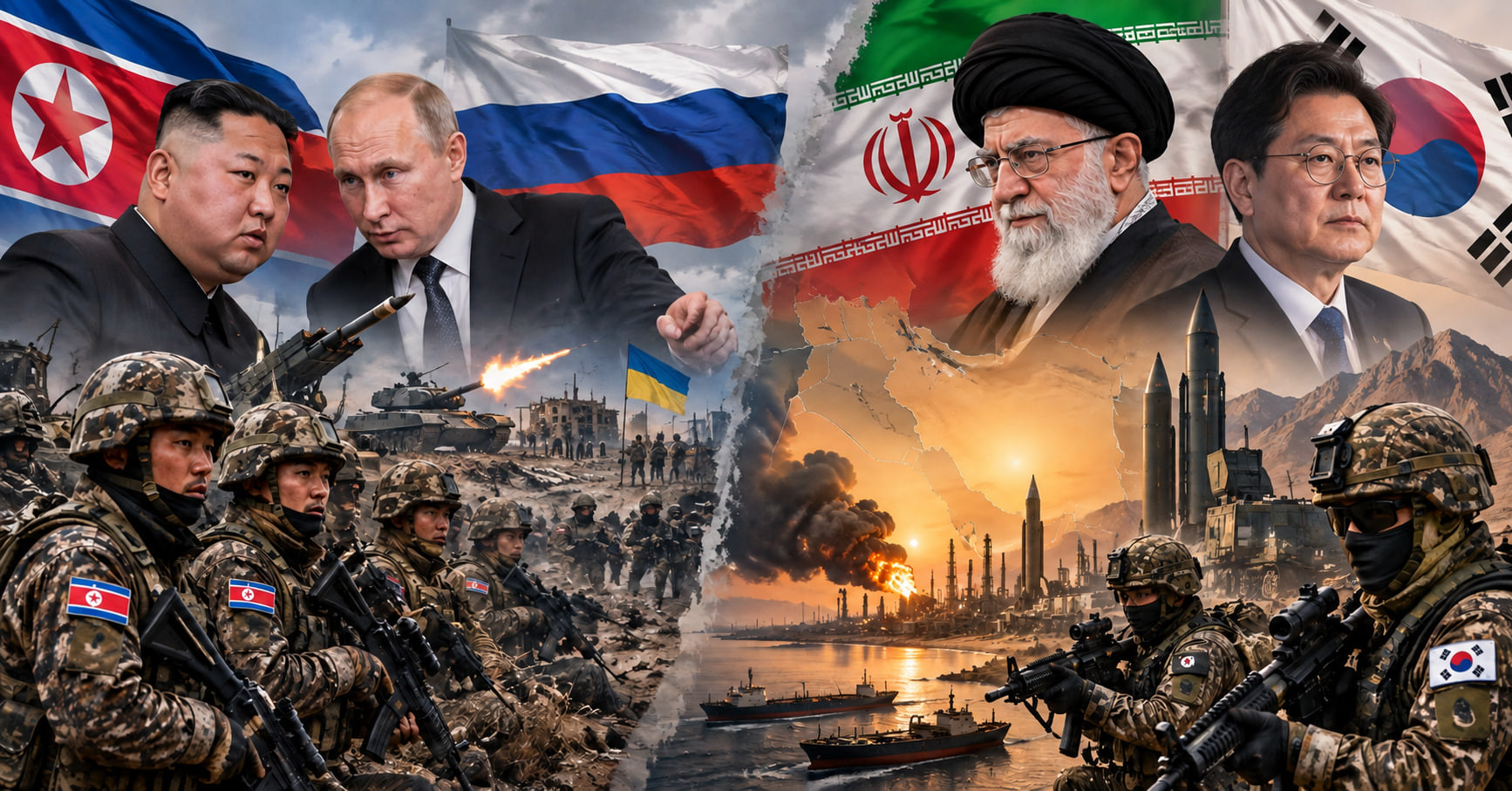
(Phnom Penh): Iran has warned South Korea if it dares to send its troops to protect freedom of navigation at the Strait of Hormuz. As of September 12, South Korea has only sent a group of people to assess the situation and has not yet made a decision. If South Korea sends its military to the Middle East, how will the situation change? There is an in-depth research article on this issue: The Russia-Ukraine war has given North Korea something that domestic training cannot fully provide. That is, real-world battlefield experience. North Korean troops, who have joined Russia, have faced drone warfare, artillery, modern surveillance systems, and real combat pressure. An analysis by the 38 North research team assesses that this experience can help Pyongyang soldiers learn to use drones, counter drones, and adapt to modern warfare. But now a reverse question is emerging in South Korea. As the US-Iran war continues and the Strait of Hormuz becomes a high-risk area, Seoul is considering participating in efforts to protect freedom of navigation. South Korea has sent a team to assess the situation, but as of September 12, it has not yet decided to send military forces to Hormuz. This consideration provoked a backlash from Iran. Tehran warned that South Korea's military involvement could bring about "serious consequences." On September 11, Iranian Foreign Minister Abbas Araghchi and his South Korean counterpart Cho Hyun also discussed Hormuz and freedom of navigation. This warning shows that Tehran does not view Seoul's accessibility as a normal maritime issue. It could mean that another US ally from Asia could enter the operational environment of war. And this leads to a big question: if South Korea joins Hormuz and its forces face real threats, can the Iran war provide Seoul with real operational experience like the Ukraine war provided Pyongyang with war experience? *What did North Korea learn from Ukraine? Ukraine has become a true war school for North Korea. The 38 North research team estimates that the North Korean military has learned from drone use, anti-drone, concealment, moving under surveillance, and coordinating forces in a real combat environment. Reuters also reported that the use of North Korean missiles and rockets in Ukraine could provide valuable battlefield data for Pyongyang soldiers' weapons upgrades. In short, North Korea is not only helping Russia, but is also learning from the modern war there. *If South Korea goes, what can Hormuz learn? South Korea sent a team to assess the situation, but as of September 12, Seoul had not yet decided to send military forces to Hormuz. If South Korea decides to join, it does not mean it will go there for the purpose of "training war." The official purpose could be the protection of trade ships, freedom of navigation, or support for maritime security operations. But the purpose and consequences are not necessarily the same. If South Korean forces were to operate in an environment threatened by drones, missiles, sea mines, and unmanned aerial vehicles, they could gain experience when the exercises are not fully peaceful. Those experiences may include vessel defense, drone and missile interception, mine detection, under pressure intelligence gathering, and joint operations with U.S. forces. Therefore, if Seoul joins and its forces face the real threat, Hormuz could become a place where South Korea gains real operational experience, even if it is not the original purpose of participation. * the experience of the two Koreas will be different North Korea has experienced extensive ground warfare, such as the use of drones, artillery, infantry, and continuous surveillance combat. South Korea, if it participates in Hormuz, can gain more experience from maritime wars and joint operations such as vessel defense, drone and missile interception, anti-mine action, and coordination with US forces. For North Korea, the problem is not just that Seoul can send forces to the Middle East. The bigger problem is: What experience will South Korean troops gain? Pyongyang itself has seen the value of experiencing real war through its involvement with Russia. Therefore, if Seoul joins North Korea's Hormuz, it can be seen that South Korea is also gaining opportunities to strengthen its operational capabilities and collaborate with the United States under real pressure. Therefore, the experiences of the two Koreas will not be the same. But the consequences may be similar: both armies can return to the Korean peninsula with a new lesson from real war. In short, what can make Pyongyang sensitive is not just Seoul's presence in Hormuz, but an experience that the South Korean military can bring back to the Korean peninsula. *Can it change the military balance on the Korean peninsula? The answer is: it can affect, but cannot transform the balance by experience alone. The balance on the Korean peninsula still relies on nuclear weapons, missiles, artillery, air and sea forces, intelligence technology, and the South Korea-US alliance. But the experience of war can change the way existing forces are used. So, the question of the future might not be, 'Who has more weapons?' but, 'Who can learn from modern war faster and transform that lesson into better tactics and real capabilities?' Conclusion: So the answer to the question, "Can the Iranian war provide war experience to South Korea?" is: yes, but only if Seoul decides to join and its forces operate under real threat. North Korea has learned from the land war in Ukraine. South Korea, if it joins Hormuz, can learn from the maritime war, ship defense, anti-drone and missile warfare, and joint operations with the United States. There is a risk for the Korean peninsula, so it's not just about what weapons the two Koreas possess, but about what they are learning from real wars abroad and how they will apply those lessons to strengthen their military capabilities. But there is a bigger concern. If wars in the Middle East continue to draw in more allies and partners of each side, conflicts that start in a region could escalate into more multi-stakeholder wars. This does not mean that World War III has begun or will inevitably happen. But the risk will increase when a war begins to draw in allies from different regions and the once-isolated battlefields begin to connect. That's where the world needs to be wary: a global war doesn't have to start with the declaration of a world war. It can start from a chain of escalating conflict that pulls more and more countries into a series of wars.
 0.000 SRY